
What Good Is a Library of Beautiful Photos That Tell the Wrong Story?
Scroll through enough personal branding portfolios and you'll start to notice the same photos repeating with different faces: arms crossed, leaning against a brick wall, laughing at an unseen joke over coffee. It's not that these images are bad. Many of them are genuinely well-shot. The problem is they could belong to almost anyone.
That's the quiet failure of the "100 poses every branding photographer should use" approach. You walk away with a folder of polished, professional-looking images—and none of them actually say anything specific about who you are, who you serve, or why someone should trust you with their problem.
A library of beautiful photos that tells the wrong story isn't a win. It's just a very expensive stock photo shoot with your face on it.

Olivia Nunn has a very successful podcast.
Why this happens
Most branding sessions start backwards. The photographer shows up with a pose list and a location, and the client shows up hoping the photographer will somehow know what to do with them. Nobody's asked the questions that actually matter:
Who do you serve, and what do they care about?
How do you serve them—are you consultative, hands-on, behind the scenes, front-facing?
Where will these images actually live? A website hero image, a LinkedIn profile, a speaker bio, an author headshot, a blog post, a printed brochure—these all call for different compositions, different crops, different energy.
Is this for one specific use, or does it need to flex across digital and print, square and landscape, color and black-and-white?
Skip those questions, and you get generically "professional" photos that could run on any website in any industry. Ask them first, and you get images built around the actual job the photos need to do.
The real problem isn't posing—it's not knowing what you need
Here's the thing most clients won't say out loud: they're not actually worried about looking bad in photos. They're worried about getting it wrong. They don't know what a "personal branding session" should produce, so they default to trusting whatever list of poses the photographer hands them, because at least it's something.
That's a reasonable response to an unclear process. It's also exactly the gap a real strategy call is supposed to close.
What a strategy call actually does
Before any camera comes out, a proper strategy conversation should map out:
Your audience and what they need to see in you to trust you
Every place these photos will live—website, social, blog, press, speaking engagements, print
The specific shots that support each of those uses (a wide environmental shot for a website hero is not the same shot as a tight crop for a LinkedIn avatar)
The story you actually want these images to tell, not a generic "approachable professional" story, but your story
From that conversation, you don't walk away with a pose list. You walk away with a shot list—one built around what the images need to accomplish, not what looked good in someone else's portfolio.
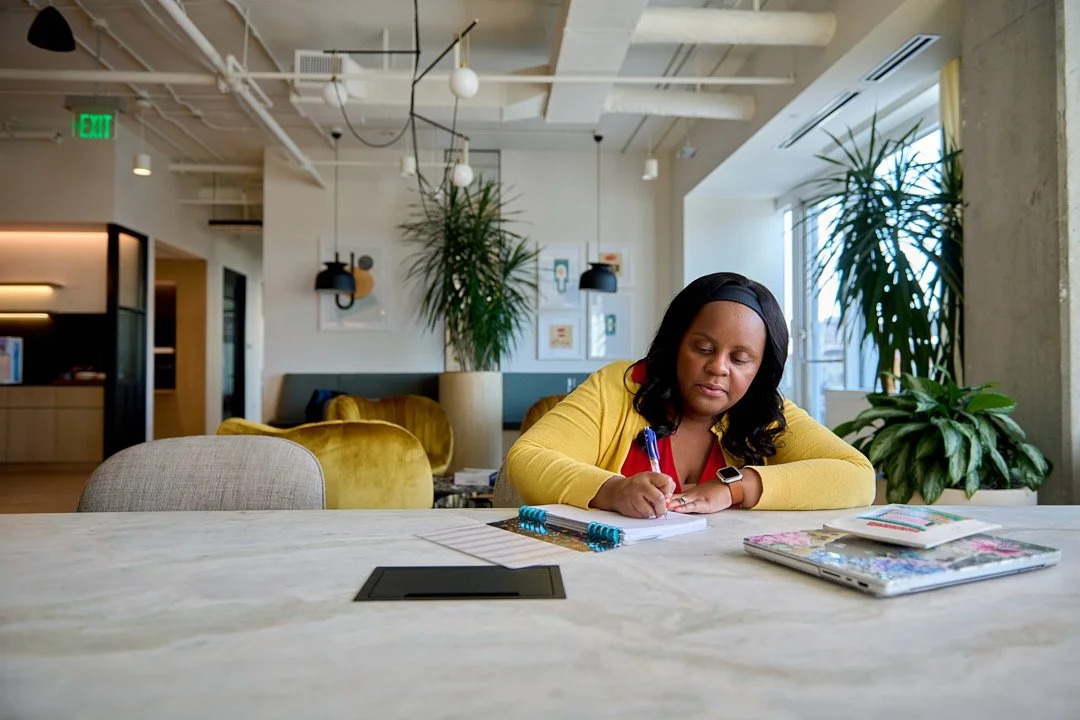
What does it look like when you’re brainstorming ideas?
The difference shows up later, not on shoot day
A cookie-cutter session photographs fine in the moment. The gap shows up six months later, when you're scrambling for a usable speaker bio photo, or your website still has last year's generic headshot because none of the branding shots actually fit the layout, or your "authentic" branding photos look identical to three competitors in your own market.
Good branding photography isn't about having more images. It's about having the right images for the specific ways you'll actually use them—which only happens when someone asks the right questions before the shutter ever clicks.
If you're planning a personal branding session in the DC, Maryland, and Virginia area, a strategy call isn't an extra step—it's the part of the process that makes everything after it actually work.